

Preparing a file for print: from screen to cotton
Between a painting finished on screen and a printed hoodie lies an invisible step that makes all the difference: file preparation.
High definition
A big back design has to stay sharp up close and from afar. So the file is worked at very high resolution, so every detail, highlight and brushstroke carries onto the fabric.
Vectorizing
Text and crisp graphic elements (lettering, logos, outlines) are vectorized: redrawn as mathematical shapes that stay perfectly sharp at any size. That's also what lets lettering translate cleanly into embroidery.
Background and edges
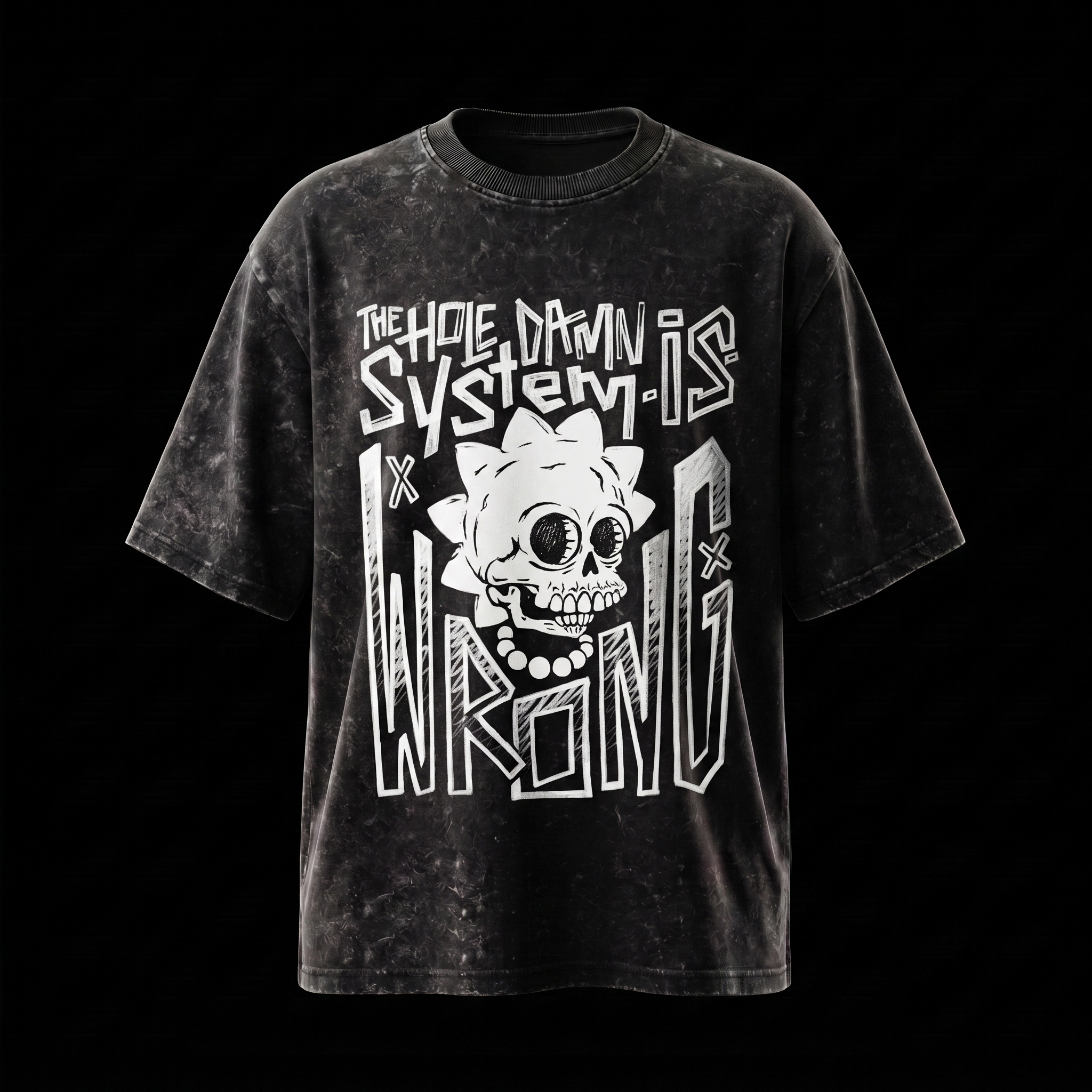
On dark fabric, every empty area must truly be empty. We clean edges, remove stray halos and decide where the fabric should show through the design. That's what makes it look integrated, not like a pasted rectangle.
Colors
A color doesn't look the same on screen and on cotton, nor on washed black and on pink. Each file is adjusted to its colorway (see our article on palettes).
FAQ
Why vectorize a drawing?
So text and outlines stay perfectly sharp at any size, in print as in embroidery.
What resolution for textile printing?
Very high resolution, so details stay sharp on a large format.