

Why transfers crack, and why you won’t find any here
Everyone has owned that tee: great the first month, then the design splits, lifts at the edges and ends up a mosaic. It's not bad luck. It's the transfer.
What really happens
A transfer is a layer of plastic (plastisol ink, film, vinyl or adhesive) sitting on top of the fabric. Cotton moves: it stretches when you wear it, shrinks in the wash, folds in the drawer. The plastic layer doesn't follow. Pulled in different directions, it cracks. Dryer and iron heat speed everything up.
The other flaws
- It doesn't breathe: a big transfer acts like a plate. On a hoodie, it's cardboard that makes you sweat.
- You can feel it: stiff, sticky, sometimes shiny.
- It ages badly: lifting edges, dulling colors.
Our choice
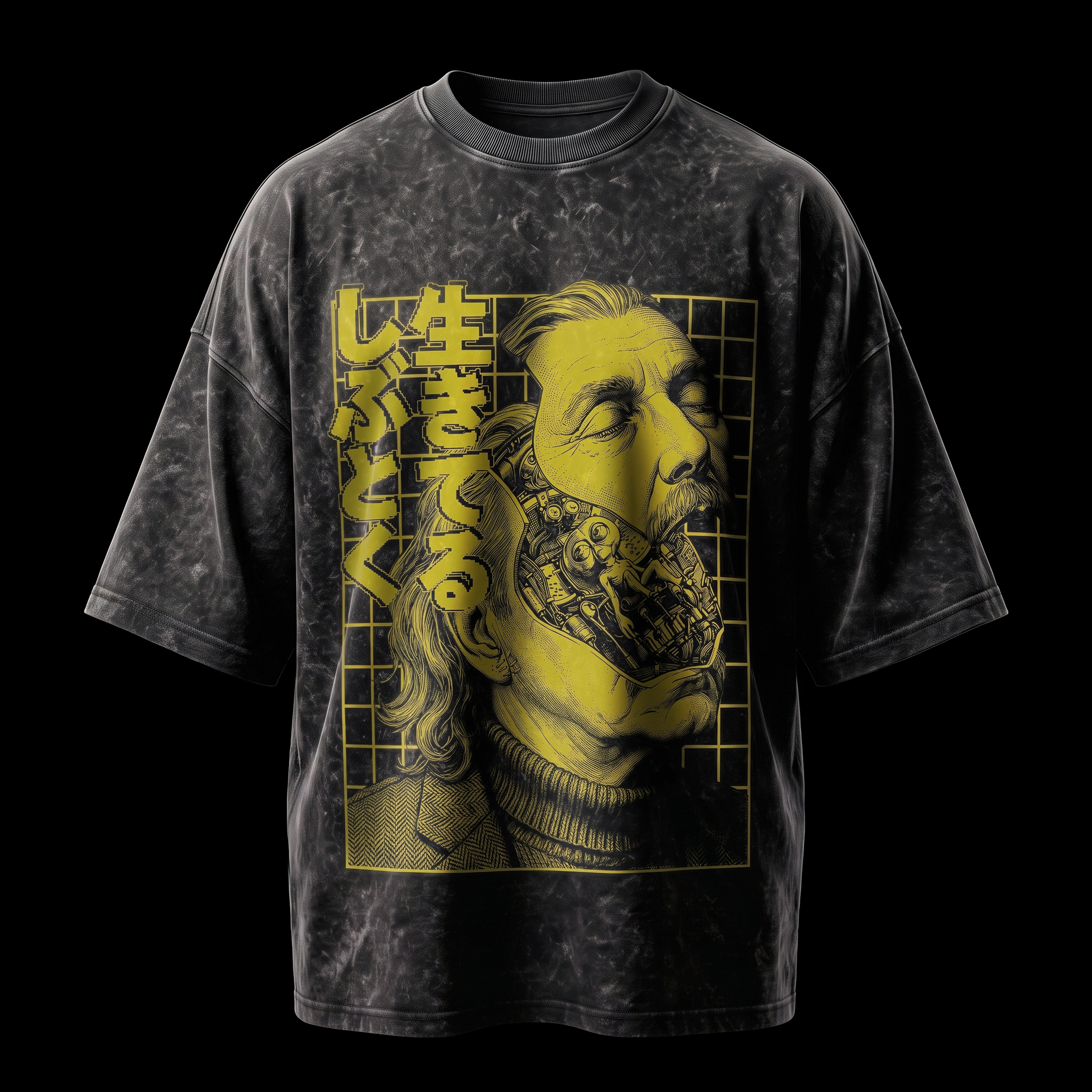
We've seen up close what those pieces turn into, and we want none of it. Here, the image is DTG printed straight into the fiber, or embroidered with thread. Nothing is glued. Nothing cracks.
FAQ
Why is the print on my shirt cracking?
It's usually a transfer: a plastic layer that can't follow the cotton's movement and splits.
How can I spot a transfer?
The design feels stiff, a bit shiny, with a clear thickness between the fabric and the image.